

Hey neighbors,
We hope you, your family, and your pets are all safe after the wild weather we experienced earlier this week. The morning of Tuesday, August 11, 2026, is certainly one we won’t forget anytime soon. A powerful storm system—preliminarily confirmed as a historic derecho—swept across Northern Indiana, bringing intense winds and some of the largest hail this region has seen in years.
Here in Starke County, particularly around North Judson, Knox, and the Toto area, we got hit hard. Between 9:30 AM and 11:10 AM, the sky turned a dark, bruised purple, and then came the sound none of us like to hear: the heavy, rapid thud of baseball-sized hail (measuring up to 2.75 and 3 inches in diameter) slamming into our lawns, cars, and homes.
Combined with ferocious wind gusts reaching between 75 and 100 mph, the storm knocked down countless trees and caused NIPSCO’s largest and most widespread power outage on record.
As the power comes back on and we begin clearing the debris from our yards, many of our neighbors are looking up at their homes and wondering, “Where do we even begin?”
If you are feeling overwhelmed, please take a deep breath. You are not alone. Our community is resilient, and we are on the ground right now in North Judson to help you navigate the recovery process step-by-step. Let’s walk through what you need to look out for and how to protect your most valuable investment—your home.
Assessing the Damage: What Baseball-Sized Hail & 75+ MPH Winds Do to Your Roof
When hail gets to be the size of baseballs, it ceases to be a minor nuisance and becomes a major structural hazard. Traveling at high speeds, chunks of ice that large carry immense force. Here is what that kind of impact, combined with 75+ mph winds, does to a home’s exterior:
Shattered Shingles & Granule Loss
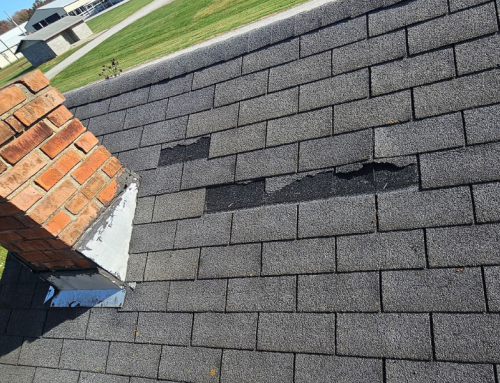
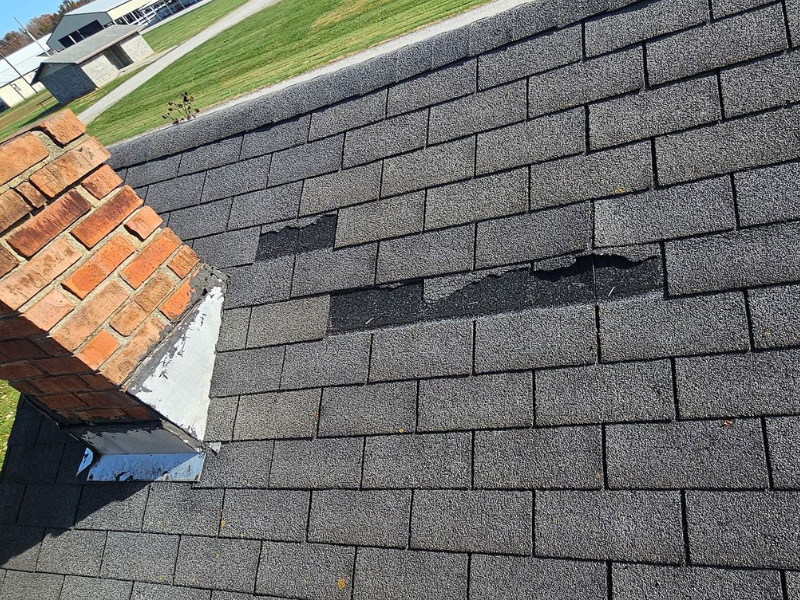
Asphalt shingles are designed to shed water and protect your roof deck. However, baseball-sized hail in Indiana can instantly crack the asphalt layer and bruise the underlying fiberglass mat. When this happens, the protective ceramic granules are stripped away, leaving the raw asphalt exposed to the sun and rain.
Wind-Stripped Shingles and Tree Debris
With wind gusts exceeding 75 mph, the storm didn’t just drop hail—it literally lifted shingles. High winds can break the sealant strips holding your shingles down, peeling them back or tearing them off entirely. Additionally, falling tree branches can puncture roofing materials, bend flashing, and damage your chimney.
Compromised Siding, Gutters, & Windows
Hail of this magnitude rarely falls perfectly straight down. Driven by extreme winds, it strikes at an angle, which means siding, window frames, fascia, and gutters often take a brutal beating. Cracked vinyl siding, dented metal gutters, and shattered window panes are incredibly common after a storm like this.
Torrential Water Intrusion
Because the hail was followed by torrential rain and localized flooding, any small opening created by the storm became an active pathway for water. Even a tiny gap can quickly lead to water pooling in your attic or dripping down into your ceiling.
The Threat of “Hidden” Damage (Why Waiting is a Costly Mistake)
One of the most common mistakes we see homeowners make after a severe storm is assuming their roof is fine because they can’t see any obvious holes from the ground. It is completely natural to look up from the driveway, see all the shingles seemingly in place, and think, “Whew, we dodged a bullet.”
Unfortunately, roof damage is often invisible from ground level. This is what we call the “ground-level illusion.”
Micro-Cracks and Wood Rot
When giant hail hits a shingle, it creates a circular fracture called a “bruise.” While it might look like a dark spot from the top of a ladder, underneath the surface, the shingle’s structural integrity is gone. Over the next few weeks and months, rainwater will seep through these micro-cracks. This slowly rots the plywood roof deck underneath, ruins your attic insulation, and fosters toxic mold growth before you ever notice a single drip inside your living room.
Insurance Claim Timelines
Another crucial reason not to wait is that homeowners’ insurance policies have strict deadlines for filing storm damage claims. If you wait six months to a year until a leak finally breaks through your ceiling, your insurance company may deny the claim, arguing that the damage was due to neglect or came too long after the official storm date. Actively pursuing a North Judson hail damage repair evaluation now protects your right to coverage.
Step-by-Step Guide: Navigating Storm Restoration and Insurance Claims
The days following a major storm can feel incredibly chaotic. To make things easier, we’ve put together a simple, stress-free guide to help you manage the restoration process safely and effectively.
Step 1: Document Everything Immediately
From a safe distance on the ground, take photos and videos of:
- Any hail you managed to save (or photos of hail next to a coin or tape measure for scale).
- Damaged vehicles, cracked siding, dented gutters, and torn window screens.
- Debris and fallen branches in your yard.
- Keep these files in a dedicated folder on your phone or computer.
Step 2: Keep Safety Your Top Priority
Before walking around your yard, check your surroundings. Watch out for lingering hazards like sagging tree limbs, shattered glass, and especially downed power lines. If you see a downed wire, assume it is live, stay far away, and report it immediately. Also, never attempt to climb onto your roof yourself. Roofs are slick, structurally weakened by storm damage, and incredibly dangerous without professional safety gear.
Step 3: Choose a Trustworthy, Certified Local Professional
After a major weather event, out-of-state “storm chasers” often flood the area. They knock on doors, offer quick paper-thin promises, install sub-standard roofs, and then disappear when the work is done—leaving you with no recourse if the roof leaks a year later.
Always partner with a local contractor who knows Indiana building codes, understands Starke County’s climate, and has a physical office nearby. A reliable local partner ensures your roof replacement in North Judson is done right and backed by a real, local warranty.
Step 4: The Joint Insurance Inspection
When you file a claim, your insurance company will send an adjuster to look at the damage. The best thing you can do is have your chosen professional contractor present during that inspection. We can walk the roof side-by-side with the adjuster, making sure every bruised shingle, damaged soft metal vent, and dented gutter is clearly identified and documented so that nothing is left off your claim.
Moving Forward: Next Steps for the North Judson Community
As Starke County continues to clean up and utility crews work tirelessly to restore local infrastructure, we want to express our deepest gratitude to the first responders and utility workers who have been working around the clock since Tuesday.
Recovery takes time, but doing it correctly will give you peace of mind for decades to come.
At White River Exteriors, we are proud to stand with the North Judson community. We specialize in Starke County storm restoration, bringing years of local expertise, high-quality materials, and a neighborly, helpful approach to every single home we touch. We work hand-in-hand with major insurance providers to take the stress off your shoulders, ensuring your home is restored to better-than-new condition.
Schedule Your Free, No-Obligation Damage Assessment
We are currently offering free, comprehensive storm damage inspections to our neighbors in North Judson and the surrounding areas. We will perform a complete, safe, and professional assessment of your roof, siding, and gutters, and provide you with an honest, detailed report of our findings—with absolutely no pressure and no obligation.
Let’s get your home back to normal. Give us a call today or send us a message through our online contact form to secure your inspection slot before the next seasonal rain rolls in.
Stay safe, watch out for one another, and let’s keep Starke County Strong!

Leave A Comment